How to dispute credit card fees
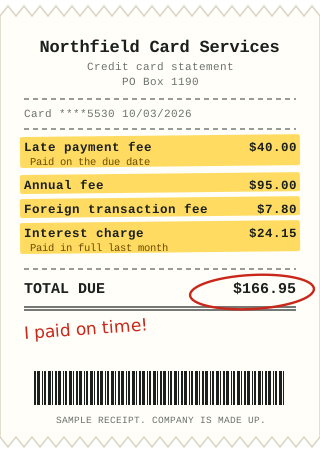
Card companies reverse fees every day for customers who ask politely and in writing. Some fees are wrong, and many are waived as a courtesy.
Late fees
Check the due date on your statement and the date your payment posted. If you paid on time, or your payment was a day late for the first time in a long while, ask for the fee to be removed. Mention how long you have had the card and that you normally pay on time.
Interest you did not expect
If you paid in full but were charged interest, look for trailing interest from the month before, or a payment that posted late. Ask for a breakdown showing how the interest was figured.
Annual and foreign transaction fees
Look at your card agreement. If you were not told about an annual fee, or a fee came after you asked to close the card, say so. For foreign fees, check your terms, because some cards do not charge them.
Billing errors have special rules
If a charge is wrong, such as a double charge or an amount you did not authorize, federal law gives you the right to dispute it in writing. Do it within 60 days of the statement that first shows it. Keep your letter short and include the date, amount and merchant.
What to put in your letter
- The last four digits of your card, never the full number.
- The fee, its date and its amount.
- Why it is wrong, or why you are asking for a courtesy.
- What you want: the fee reversed and any interest on it removed.
If they say no
Ask for a supervisor, then write to the card company's executive customer relations. You can also complain to the federal agency that handles consumer financial complaints.
Want the letter written for you?
Fight That Fee reads your bill, writes your dispute letter, and tells you who to send it to and what to do next. $9.99 to start. Follow-up letters are $2.